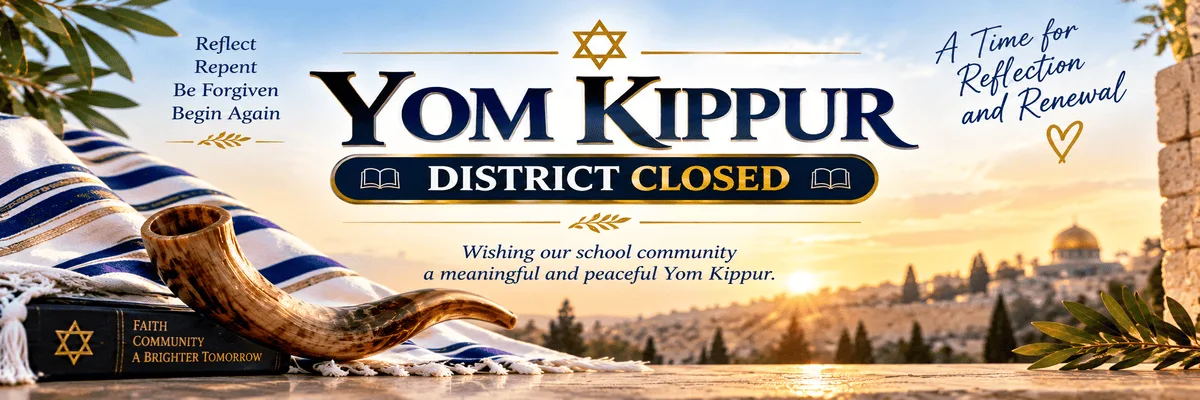
Monday, September 21, 2026
The History of Yom Kippur
Yom Kippur, also known as the Day of Atonement, is the holiest day of the year in Judaism. Its history goes back thousands of years, all the way to the time of Moses and the Israelites. According to Jewish tradition, after the Israelites left Egypt and received the Ten Commandments, Moses went up Mount Sinai. While he was gone, the people became afraid and impatient and created the Golden Calf to worship. When Moses returned and saw what had happened, he broke the stone tablets containing the commandments. Moses later returned to the mountain to ask God to forgive the people. After a period of repentance, Moses came down with a second set of tablets. Jewish tradition connects this reconciliation with the 10th day of the Hebrew month of Tishrei, the day that became Yom Kippur. The Torah later established the Day of Atonement as a sacred annual observance. In ancient Israel, when the Temple stood in Jerusalem, Yom Kippur included a very special ceremony led by the High Priest. This was the one day of the year when the High Priest could enter the innermost and most sacred part of the Temple, known as the Holy of Holies. The ceremonies focused on repentance, forgiveness, and making things right before God. One famous part involved two goats. One was offered as a sacrifice, while the other symbolically carried the sins of the people away into the wilderness. This is where the idea behind the word "scapegoat" comes from. After the Second Temple in Jerusalem was destroyed by the Romans in 70 CE, the Temple sacrifices could no longer continue. Yom Kippur gradually became centered on prayer, fasting, repentance, confession, and seeking forgiveness. Today, Yom Kippur begins at sunset and continues until nightfall the following day, about 25 hours. Many Jewish people fast during this time and spend much of the day in synagogue. It is also a time to think about mistakes made during the past year, apologize to people who have been hurt, forgive others, and make a sincere effort to do better. An important part of Yom Kippur is that asking God for forgiveness does not replace making things right with another person. If you have hurt someone, Jewish tradition teaches that you should go to that person and try to repair the relationship. Yom Kippur comes shortly after Rosh Hashanah, the Jewish New Year. Together, this period is known as the High Holy Days. It is a time of reflection and a new beginning. At its heart, Yom Kippur carries a beautiful message that has survived for thousands of years: We make mistakes. We can admit them. We can ask for forgiveness. We can forgive. And we can choose to begin again and do better.
This date is shown automatically on every calendar — a specific school or district can mark itself open or closed for this holiday from its own settings.
