Saturday, November 3, 2057
The History of Election Day
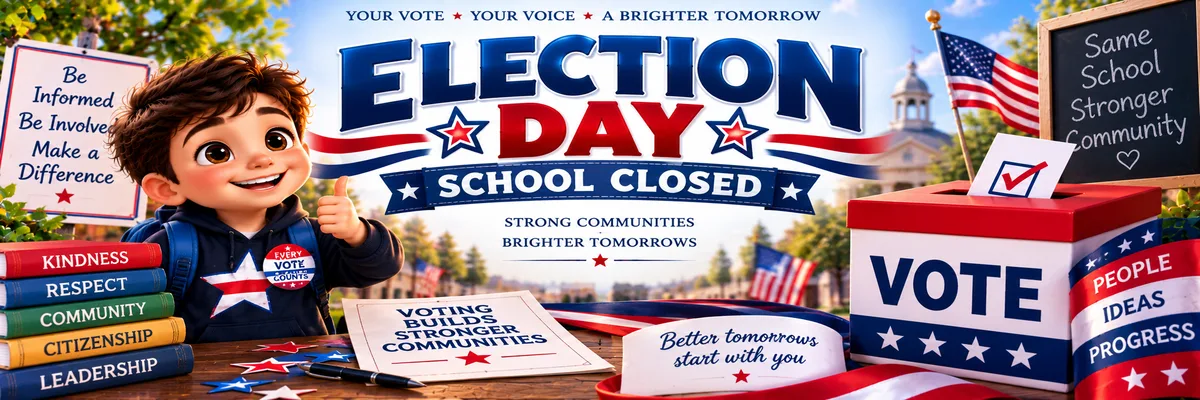
Election Day in the United States is more than a day when people walk into a polling place, fill out a ballot, and wait for results. It represents an idea that has been developing since the country's beginning: Citizens should have a voice in choosing the people who govern them. But American elections have changed enormously over the centuries. Who could vote, how people voted, where they voted, and even when they voted were once very different from what we know today. And perhaps the most surprising part is that, at the beginning, there wasn't even one national Election Day. Voting in Early America When the United States was founded, voting rights were extremely limited compared with today. The Constitution did not originally establish one universal rule defining exactly who could vote in every election. Much of that authority was left to the states. In the early years of the country, voting was generally restricted to white men, and many states also required voters to own property or meet other qualifications. That meant a large portion of the population had no political vote. Women generally could not vote. Enslaved people could not vote. Most free Black Americans faced restrictions or exclusion depending on the state. Native Americans generally were not recognized as voting citizens. Even many white men without sufficient property could initially be excluded. The American idea of representative government existed, but access to that government was far from equal. There Wasn't One Election Day During the early 1800s, states were allowed considerable freedom in deciding when presidential elections would take place. Voting could happen on different days in different states. This became increasingly problematic as transportation and communication improved. Election results from one state could become known before people in another state had even voted. Congress eventually decided the country needed a more standardized system. Why Is Election Day on a Tuesday? In 1845, Congress established a uniform date for choosing presidential electors. The law placed Election Day on: The Tuesday after the first Monday in November. That wording is intentional. Election Day therefore falls between November 2 and November 8. But why Tuesday? The answer makes much more sense if we imagine life in rural America during the 1800s. Many Americans were farmers and lived far from polling locations. Sunday was commonly reserved for church and religious observance. Traveling to vote could take considerable time by horse or wagon. Wednesday was traditionally a market day in many communities. Tuesday provided people with Monday for travel, Tuesday for voting, and potentially Wednesday for market activities. November also made practical sense. The major harvest season was generally finished, while severe winter weather had not necessarily arrived yet. Our modern Election Day calendar therefore still carries the fingerprints of 19th-century American farming life. Voting Wasn't Always Secret Today, we expect our ballot choices to be private. That was not always the case. Early American voting could be surprisingly public. In some elections, voters announced their choices aloud. Political parties later distributed their own printed ballots, sometimes on distinctive colored paper. That could make it obvious which party someone supported. This created opportunities for intimidation, bribery, and pressure. During the late 19th century, states increasingly adopted what became known as the Australian ballot, a government-printed ballot listing candidates from multiple parties that voters marked privately. The secret ballot eventually became a basic feature of American elections. Voting Rights Slowly Expanded One of the most important parts of Election Day history is the long struggle over who gets to participate. During the early 1800s, many property requirements for white male voters disappeared. After the Civil War, the 15th Amendment, ratified in 1870, prohibited denying citizens the right to vote based on race, color, or previous condition of servitude. But constitutional protection did not mean equal voting access suddenly became reality. Especially in the South, Black Americans faced poll taxes, literacy tests, intimidation, violence, discriminatory registration systems, and other methods deliberately designed to prevent them from voting. For generations, Americans fought against those barriers. Women Fight for the Vote Women also spent decades demanding voting rights. The women's suffrage movement included generations of organizers, writers, speakers, protesters, and ordinary citizens. After a long national struggle, the 19th Amendment was ratified in 1920. It prohibited denying the right to vote on account of sex. Millions of women gained greater access to the ballot. But even then, discriminatory state laws continued preventing many women of color, particularly Black women in the South, from exercising that right freely. The story was still not finished. Native American Voting Rights Native American voting history is also complicated. In 1924, the Indian Citizenship Act granted U.S. citizenship to Native Americans born in the United States who had not already obtained citizenship through other means. But citizenship did not immediately guarantee practical voting access everywhere. Some states continued restricting Native American voting for years afterward. Legal challenges and additional changes were necessary before Native Americans gained broader access to voting across the country. The Voting Rights Act of 1965 One of the most important moments in American voting history came during the Civil Rights Movement. Black Americans and civil rights activists organized marches, voter registration campaigns, demonstrations, and legal challenges against discriminatory voting systems. Many faced arrest, violence, intimidation, and even death. Their efforts helped lead to the Voting Rights Act of 1965. The law provided powerful federal protections against racial discrimination in voting and targeted practices that had been used to prevent Black citizens from exercising their constitutional rights. It dramatically changed political participation in many parts of the country. Young Americans Gain Greater Voting Rights For much of American history, the standard voting age was 21. During the Vietnam War era, this increasingly became controversial. Young Americans could be drafted into military service at age 18 but, in many elections, were considered too young to vote. The argument became famous: Old enough to fight, old enough to vote. In 1971, the 26th Amendment was ratified. It prohibited denying citizens age 18 or older the right to vote because of age. The voting age for elections across the country became 18. Election Day Is About More Than the President Presidential elections receive enormous attention, but Americans vote for much more than president. Depending on where someone lives and which election is occurring, voters may choose: Members of Congress. Governors. State legislators. Mayors. County officials. Judges. Sheriffs. School board members. Local officials. Voters may also decide ballot questions involving taxes, borrowing, constitutional amendments, public projects, school funding, and other policies. For a school community, this is especially important. Local elections can directly affect school boards, budgets, facilities, taxes, programs, and educational policy. Sometimes the election receiving the least national attention can have the most immediate effect on someone's neighborhood. Why Are Schools Often Closed on Election Day? Schools are frequently used as polling locations. That creates a practical problem. A normal school day involves children arriving while potentially hundreds or thousands of members of the public are also entering the building to vote. For security, parking, traffic, staffing, and logistical reasons, some school districts close schools to students on Election Day. Others remain open or modify schedules. There is no universal rule requiring every American school to close. That decision depends on the state, district, school calendar, and whether school buildings are being used as polling locations. Voting Has Changed Again Modern Americans do not necessarily cast their ballots only on Election Day. Depending on state law, voters may have access to: Early in-person voting. Absentee voting. Mail voting. Election Day voting. The rules differ considerably from state to state. So although we still call it Election Day, millions of Americans may cast their ballots before that Tuesday ever arrives. Election Day Today The history of Election Day shows something important about American democracy. The right to vote was never experienced equally by everyone from the beginning. It expanded over generations. People organized. People marched. People challenged laws. People went to court. People changed constitutions. People demanded that the country's democratic promises apply to them too. And that history is particularly valuable for children to learn. Election Day does not need to be about telling students who they should support. A school can teach something much more important: Learn how your government works. Ask questions. Study the issues. Listen to people who disagree with you. Check your facts. Respect the rights of others. And when you are old enough, participate. Because democracy isn't simply something a country has. It is a system that depends on people continuing to use it, protect it, question it, and improve it. Your vote is your voice. Learn the history, understand your choices, and when your time comes, make your voice count.
This date is shown automatically on every calendar — a specific school or district can mark itself open or closed for this holiday from its own settings.
