Friday, March 30, 2029
The History of Good Friday
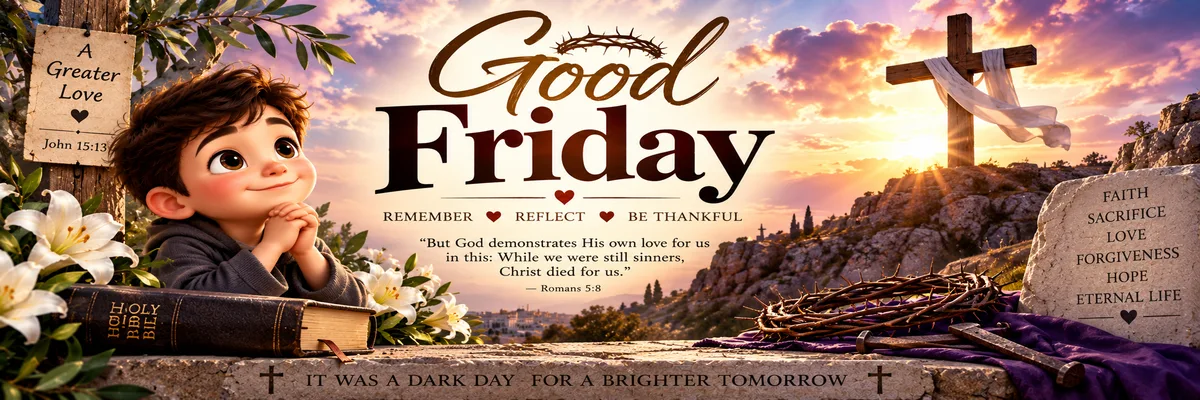
Good Friday is one of the most solemn days in the Christian calendar. It commemorates the crucifixion and death of Jesus Christ, which Christians believe took place in Jerusalem nearly 2,000 years ago. Good Friday is observed during Holy Week, on the Friday before Easter Sunday. The name can sound strange at first. If Good Friday remembers the suffering and death of Jesus, why would Christians call such a sad day "good"? The answer is found in what Christians believe happened afterward. The Final Days of Jesus According to the New Testament, Jesus traveled to Jerusalem shortly before his death. His arrival in the city is remembered by Christians on Palm Sunday, the beginning of Holy Week. During the days that followed, Jesus taught in Jerusalem and spent time with his disciples. On the evening before his crucifixion, Jesus shared a final meal with them. Christians remember this event as the Last Supper. That day is commemorated as Holy Thursday, also called Maundy Thursday in many Christian traditions. During the meal, Jesus spoke about what was going to happen and instructed his disciples to remember him through the sharing of bread and wine. Jesus Is Arrested Later that night, Jesus went with his disciples to the Garden of Gethsemane, where he prayed. There, he was arrested. According to the Gospel accounts, Jesus was questioned by Jewish religious authorities and later brought before the Roman governor Pontius Pilate. The Romans controlled Judea at the time, and crucifixion was a Roman method of execution. Jesus was sentenced to death by crucifixion. The Crucifixion Jesus was mocked, beaten, and forced toward the place where he would be executed. The Gospel accounts describe him being given a crown of thorns and being crucified at a place called Golgotha, also known as Calvary. Crucifixion was an extremely painful and humiliating form of execution. Jesus was placed on a cross and eventually died. According to the Gospel of John, Jesus' final words included: "It is finished." After his death, Jesus' body was taken down from the cross and placed in a tomb. For his followers, it must have appeared that everything they had hoped for had ended. Why Is It Called "Good" Friday? The exact historical development of the English name "Good Friday" is not completely certain. But its Christian meaning is clear. Christians do not consider the suffering and execution themselves to be good. Instead, the day is called Good Friday because Christians believe that Jesus willingly gave his life for humanity and that his death became part of God's plan for salvation and forgiveness. In Christian belief, the cross represents sacrifice, but it also represents love. That is why one of the best-known passages associated with Good Friday says: "But God demonstrates his own love for us in this: While we were still sinners, Christ died for us." Romans 5:8 So Good Friday contains an unusual combination of sorrow and hope. Christians mourn the death of Jesus while knowing that the story does not end at the cross. What Happened After Good Friday? According to the New Testament, Jesus was buried before the beginning of the Jewish Sabbath. The following day is remembered by Christians as Holy Saturday. Then comes Easter Sunday. Christians believe that on the third day, Jesus rose from the dead. The Resurrection is the foundation of the Christian celebration of Easter and explains why Good Friday, despite being such a solemn day, ultimately carries a message of hope. Without Easter Sunday, Good Friday would simply be the story of an execution. Within Christianity, however, the two events belong together. Good Friday remembers the sacrifice. Easter celebrates the victory that Christians believe followed it. How Christians Have Observed Good Friday Christians have commemorated the death of Jesus since the early centuries of Christianity, although traditions developed differently across Christian communities. Over time, Good Friday became one of the central observances of Holy Week. Many churches hold special services. Some Christians fast or avoid meat. Churches may remain unusually quiet. Some remove decorations or cover religious objects. Others participate in processions or reenact the Stations of the Cross, which remember events associated with Jesus' journey toward his crucifixion. In some traditions, services are held between noon and 3:00 p.m., reflecting the hours traditionally associated with the crucifixion. Unlike Christmas or Easter Sunday, Good Friday is generally not intended to be festive. It is a day for reflection. Why Does the Date Change Every Year? Good Friday does not have a fixed calendar date because it is connected to Easter. Easter's date is determined using a system connected with the spring equinox and the lunar calendar. Because Easter moves from year to year, Good Friday moves with it. It always occurs two days before Easter Sunday. Good Friday Around the World Good Friday is observed by Christians in many countries and Christian traditions, including Catholic, Orthodox, Anglican, Lutheran, Methodist, and other churches. The exact customs vary considerably. In some countries, Good Friday is also a public holiday. Businesses, government offices, or schools may close. In the United States, however, Good Friday is not a federal holiday. Whether schools close depends on the state and individual school district calendar. That distinction is useful for a school community. The religious observance exists independently of whether a particular district chooses to close. Good Friday Today For Christians, Good Friday is ultimately about much more than remembering something that happened long ago. It is a day to think about faith, sacrifice, forgiveness, love, suffering, and hope. The cross is one of Christianity's most recognizable symbols precisely because something associated with suffering became, within Christian belief, a symbol of salvation and hope. Good Friday therefore ends with an unfinished feeling. Jesus has died. The tomb has been closed. His followers are grieving. And Easter has not arrived yet. That waiting is part of the observance. Good Friday remembers the darkest part of the story while pointing toward what Christians believe comes next: resurrection, hope, and new life.
This date is shown automatically on every calendar — a specific school or district can mark itself open or closed for this holiday from its own settings.
