Wednesday, January 1, 2048
The History of New Year's Day
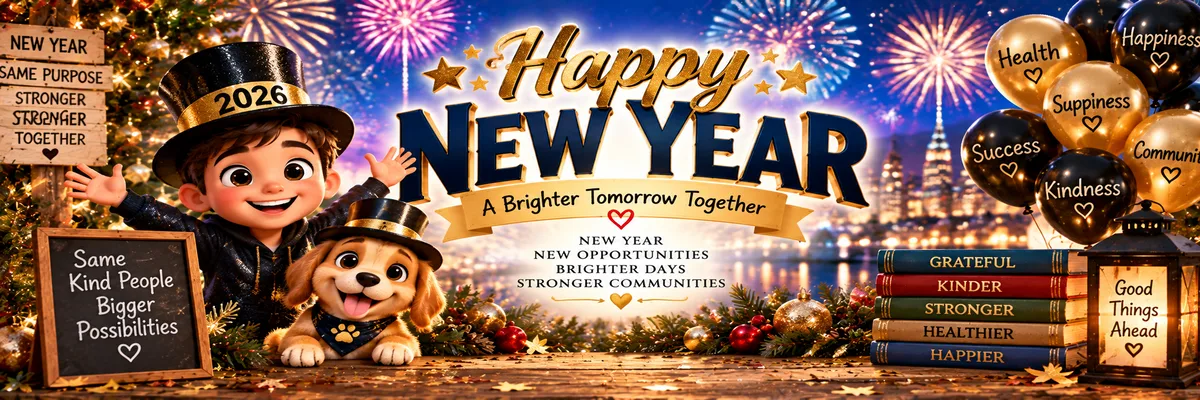
New Year's Day is celebrated on January 1 and marks the beginning of a new calendar year. Today, we welcome it with fireworks, countdowns, parties, music, family gatherings, resolutions, and the famous cry of “Happy New Year!” But people have been celebrating the beginning of a new year for thousands of years, and January 1 was not always where the year began. The First New Year Celebrations Some of the earliest recorded New Year celebrations took place in ancient Mesopotamia, more than 4,000 years ago. The Babylonians celebrated a festival called Akitu, which occurred around the beginning of spring. That makes sense when you think about it. Spring meant crops beginning to grow, longer days, and nature coming back to life. For an agricultural society, that probably felt much more like a “new year” than the middle of winter. The festival lasted several days and included religious ceremonies and traditions connected with renewal and the coming agricultural year. So Why Does Our Year Begin in January? For that, we have to visit ancient Rome. Early versions of the Roman calendar did not begin the year exactly as our modern calendar does. Eventually, January 1 became associated with the beginning of the Roman civil year. January itself was named after Janus, the Roman god associated with beginnings, transitions, doorways, and endings. Janus was traditionally represented with two faces, one looking backward and another looking forward. Honestly, that is almost the perfect symbol for New Year's Day. 😂 We look back at the year we just finished while looking forward to what comes next. Julius Caesar Changes the Calendar By the time of Julius Caesar, the Roman calendar had become badly misaligned with the seasons. Caesar introduced a major calendar reform. The new system, known as the Julian calendar, took effect in 45 BCE and established a calendar much closer to the one we recognize today. January 1 remained the beginning of the year. But the calendar story still wasn't finished. New Year's Day Changes Again After Christianity spread throughout Europe, different places did not always agree about when the new year should begin. At various times and places, dates connected with Christian observances were used instead of January 1. That meant two people living in different parts of Europe could theoretically disagree about what year it was for part of the year. Imagine trying to schedule a school calendar with THAT system. 😂 Eventually another major calendar reform helped standardize things. The Gregorian Calendar The Julian calendar was pretty good, but it wasn't perfect. Its calculation of the length of the year was slightly too long. That tiny difference accumulated over centuries and gradually caused calendar dates to drift away from the astronomical seasons. In 1582, Pope Gregory XIII introduced what became known as the Gregorian calendar. The calendar corrected the accumulated difference and improved the rules governing leap years. January 1 continued as New Year's Day. Different countries adopted the Gregorian calendar at different times, sometimes many years or even centuries apart. Eventually, it became the civil calendar used by most of the world today. Where Did New Year's Resolutions Come From? The idea of beginning a new year by promising to do better is also very old. Ancient peoples made promises associated with renewal, religion, debts, and responsibilities. Over time, this developed into the modern tradition of making New Year's resolutions. Today our promises might sound a little different: Exercise more. Save money. Read more books. Be more organized. Spend more time with family. Be kinder. And, of course, the famous: “This year I am definitely going to stick to my resolution.” 😂 Whether we actually make it past January is another part of the tradition. Why Do We Celebrate at Midnight? Because a new calendar day begins at midnight, the final seconds of December 31 became the natural countdown to the new year. People gather together and count: 10... 9... 8... until the clock reaches midnight. Then come the cheering, hugs, kisses, music, fireworks, and Happy New Year messages. Large public celebrations developed around the world, and different countries created their own traditions for welcoming the year. New Year's Traditions Around the World One of the beautiful things about New Year's Day is how differently people celebrate it. In the United States, fireworks, parties, resolutions, and the Times Square ball drop are famous traditions. In Spain and some Spanish-speaking communities, people eat 12 grapes at midnight, traditionally one with each clock strike, for good fortune in the coming months. In Brazil, many people celebrate wearing white, particularly during famous coastal celebrations, with traditions associated with peace and hopes for the coming year. Other cultures celebrate with special foods, religious services, family gatherings, music, cleaning the home, gifts, or traditions intended to bring health, prosperity, happiness, and good luck. And not every culture's traditional or religious New Year occurs on January 1. There are several different calendars and New Year celebrations throughout the world. New Year's Day Today Today, January 1 is recognized as New Year's Day throughout much of the world. But perhaps the most interesting thing about the holiday is that nothing physically changes when the clock reaches midnight. The sun doesn't suddenly shine differently. We don't magically become different people. The world simply keeps moving. We are the ones who give the moment meaning. We use it as an opportunity to stop. To remember what happened. To appreciate what went right. To learn from what went wrong. To say goodbye to things we want to leave behind. And to imagine what we might do differently with the time ahead. Maybe that is why humans have continued celebrating new beginnings for thousands of years. We like another chance. Another chapter. Another opportunity to try again. New year. New opportunities. Brighter days. Stronger communities. And hopefully, plenty of good things ahead. Happy New Year!
This date is shown automatically on every calendar — a specific school or district can mark itself open or closed for this holiday from its own settings.
