Monday, February 15, 1988
The History of Presidents' Day
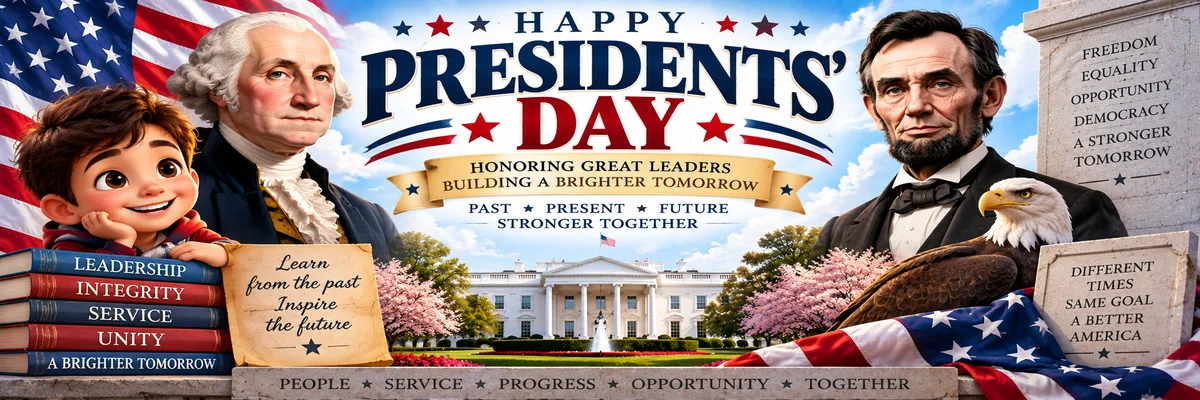
Presidents' Day is observed in the United States on the third Monday of February. For many Americans, it is a day associated with presidents, American history, flags, patriotic displays, and, of course, a suspicious number of mattress sales. 😂 But officially, the federal holiday has a different name: Washington's Birthday. Yes. Presidents' Day is one of those holidays where the name almost everyone uses is not actually the official federal name. Its history begins with America's first president, George Washington. It Started With George Washington George Washington was born in Virginia in 1732. He became commander of the Continental Army during the American Revolution and later served as the first President of the United States, from 1789 to 1797. Washington played an enormous role in establishing traditions for the new presidency and the peaceful transfer of political power. After his death in 1799, Americans continued celebrating his birthday as a way of honoring his life and his importance to the founding of the country. These celebrations happened long before his birthday became an official federal holiday. Wait... When Was Washington's Birthday? Here comes a little calendar confusion. 😂 Washington was originally born on February 11, 1731, according to the calendar then used by Britain and its colonies. When Britain adopted the Gregorian calendar, the date became February 22, 1732. February 22 became the birthday Americans traditionally associated with Washington. In 1879, Congress made Washington's Birthday a federal holiday for federal employees in Washington, D.C. In 1885, the holiday was expanded to federal employees throughout the country. Washington became the first individual American honored with a federal holiday celebrating his birthday. Then There Was Abraham Lincoln Another extremely important president happened to have a February birthday. Abraham Lincoln was born February 12, 1809. Lincoln served as the 16th President of the United States during the Civil War. His presidency became forever connected with preserving the Union and the destruction of legal slavery in the United States. He issued the Emancipation Proclamation, and during his presidency Congress passed the 13th Amendment, which abolished slavery. After Lincoln was assassinated in 1865, many states and communities began commemorating his birthday as well. So February eventually contained celebrations honoring two of America's most famous presidents: Abraham Lincoln on February 12 and George Washington on February 22. Then Congress Moved the Holiday In 1968, Congress passed the Uniform Monday Holiday Act. The idea was to move several federal holidays to Mondays, creating more predictable three-day weekends. Beginning in 1971, Washington's Birthday was celebrated on the third Monday of February instead of always falling on February 22. And something funny happened. Because the third Monday can fall anywhere from February 15 through February 21, the federal holiday called Washington's Birthday can never actually occur on Washington's February 22 birthday. 😂 So Where Did "Presidents' Day" Come From? This is where things become a little messy. There were proposals to rename the holiday Presidents' Day, partly to recognize Abraham Lincoln as well as Washington. But the federal law retained the official name: Washington's Birthday. Nevertheless, states, businesses, advertisers, calendars, and the public increasingly began calling the holiday Presidents' Day. Different states also developed different versions of the observance. Some specifically honor Washington. Some recognize Washington and Lincoln. Others use Presidents' Day to recognize presidents more generally. So when your school calendar says Presidents' Day, it is using the name most Americans recognize, even though the federal holiday remains officially Washington's Birthday. What Does Presidents' Day Celebrate Today? In modern American culture, Presidents' Day has grown beyond the celebration of one person's birthday. Schools often use the holiday as an opportunity to teach students about: George Washington and the founding of the country. Abraham Lincoln and the Civil War. The Constitution. The presidency. American government. Leadership. Citizenship. And the accomplishments, mistakes, challenges, and decisions of presidents throughout American history. That last part is important. Studying presidents does not mean pretending every president was perfect. They weren't. Presidents were human beings who governed during very different periods of American history. Some made decisions that changed the country for the better. Others made decisions that caused enormous harm. Many left complicated legacies containing both achievements and failures. History becomes much more useful when we study what leaders actually did, rather than turning them into perfect heroes or simple villains. Presidents' Day Today Today, Presidents' Day is a federal holiday. Federal government offices and many schools, banks, and other institutions are closed, although schedules vary. There are ceremonies, historical programs, museum events, educational activities, and visits to presidential landmarks. And then there are the sales. Cars. Furniture. Appliances. Mattresses. Somewhere along the way America apparently decided the best way to honor George Washington was 30% off a sectional sofa. 😂🇺🇸 But underneath all of that is a holiday with a valuable educational purpose. Presidents' Day gives us an opportunity to look backward at the people who have held one of the most powerful positions in the country and ask important questions. What makes someone a good leader? What happens when leaders make mistakes? How has the presidency changed? How have ordinary Americans influenced their presidents? And what can we learn from the successes and failures of the people who came before us? Because American history isn't only about remembering names and dates. It is about learning from the past so the next generation can make better decisions in the future. Different presidents. Different times. Different challenges. One continuing American story. Learn from the past, understand the present, and help build a better future.
This date is shown automatically on every calendar — a specific school or district can mark itself open or closed for this holiday from its own settings.
