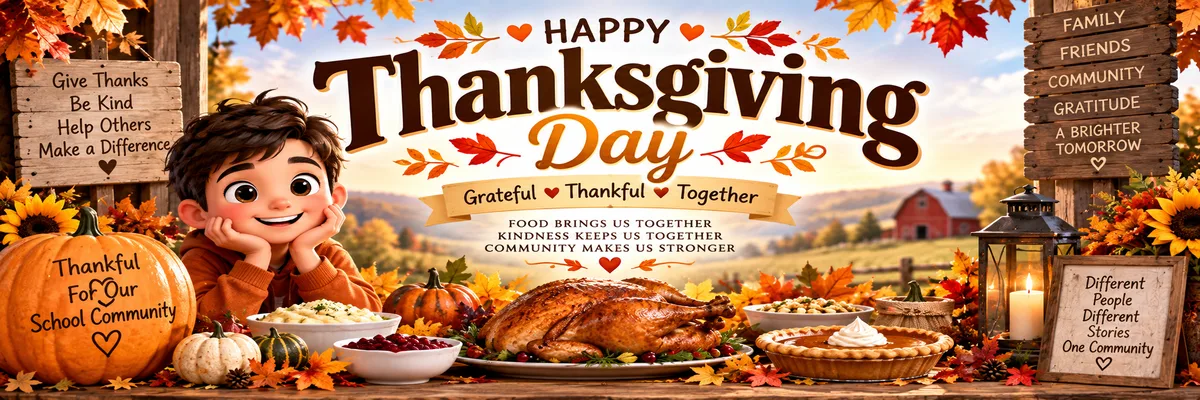
Thursday, November 24, 1994
The History of Thanksgiving Day
Thanksgiving is celebrated in the United States on the fourth Thursday of November. Today, we usually think of turkey, family gatherings, football, parades, pumpkin pie, and giving thanks for the good things in our lives. But the history of Thanksgiving is much more complicated than the familiar story many of us learned as children. Harvest Celebrations Came First People around the world have celebrated successful harvests for thousands of years. Long before the United States existed, Indigenous peoples throughout North America held ceremonies and gatherings connected to harvests, gratitude, community, and the changing seasons. European cultures also had traditions of giving thanks for successful harvests and other blessings. These different traditions form part of the background of what eventually became the American Thanksgiving holiday. The Famous 1621 Gathering The event most often connected with the first Thanksgiving happened in 1621 in Plymouth, in present-day Massachusetts. English colonists who had arrived aboard the Mayflower had survived an extremely difficult first year. Many of them died from disease, exposure, and lack of food. The Wampanoag people, who had lived in the region for generations, played an important role in the colonists' survival. One particularly important person was Tisquantum, commonly known as Squanto, a member of the Patuxet people. He helped the colonists learn about local agriculture and served as an interpreter and intermediary. After the colonists' 1621 harvest, they held a celebration lasting several days. Wampanoag leader Ousamequin, often called Massasoit by the English, and about 90 Wampanoag men joined the gathering. This is the event that later generations would associate with the "First Thanksgiving." But they did not call it Thanksgiving in the way we use the word today, and it was not the beginning of an annual national holiday. The Story Wasn't as Simple as We Learned The traditional school story often presents the colonists and Native Americans sharing a peaceful meal and living happily together afterward. History was far more complicated. The Wampanoag had their own political, cultural, and strategic reasons for establishing relations with the Plymouth colonists. The decades that followed brought increasing European settlement, competition for land, disease, broken relationships, and eventually devastating warfare. For this reason, Thanksgiving can have very different meanings for different Americans. For many families, it is a beloved celebration of gratitude and togetherness. For some Native Americans, it is also a time to remember the enormous losses Indigenous peoples experienced following European colonization. Understanding both parts does not ruin Thanksgiving. It gives us a more complete understanding of our history. Thanksgiving Becomes an American Tradition Thanksgiving celebrations continued in different places and at different times throughout colonial and early American history. In 1789, President George Washington issued a proclamation calling for a national day of thanksgiving. But there still wasn't one permanent Thanksgiving holiday celebrated throughout the entire country every year. That would take many more decades. One Woman Wouldn't Give Up A writer and editor named Sarah Josepha Hale spent years campaigning for a national Thanksgiving holiday. She wrote letters to politicians and presidents arguing that a shared Thanksgiving celebration could help bring Americans together. Then came the Civil War. In 1863, while the country was divided by war, President Abraham Lincoln proclaimed a national Thanksgiving observance for the final Thursday of November. The idea of Thanksgiving as a national tradition became firmly established. How We Got the Fourth Thursday Thanksgiving's date changed again during the 20th century. In 1939, President Franklin D. Roosevelt moved Thanksgiving earlier because November had five Thursdays that year. The idea was to extend the Christmas shopping season and help businesses during the Great Depression. The decision caused quite a mess. Different states observed Thanksgiving on different Thursdays, and people jokingly called the changed date "Franksgiving." Eventually Congress stepped in. In 1941, federal law established Thanksgiving on the fourth Thursday of November, which is where it remains today. Thanksgiving Today Thanksgiving has grown into one of America's biggest family holidays. Families and friends gather for meals. Communities organize food drives. Volunteers serve meals. Schools teach about gratitude and history. Cities hold parades, and millions of people somehow become extremely interested in both football and whether a turkey is dry on the exact same afternoon. 😂 Different families also bring their own cultures to the table. A Thanksgiving dinner might include turkey and stuffing, but it might just as easily sit beside arroz, tamales, macaroni and cheese, dumplings, collard greens, lasagna, or recipes brought to America from somewhere else. That is part of the story too. Thanksgiving has changed as America has changed. At its best, the holiday gives us an opportunity to appreciate what we have while also remembering that our history contains both moments of cooperation and moments of great injustice. Give thanks. Share what you have. Remember those who came before us. Help someone who needs it. And make room at the table, because community is something we build together.
This date is shown automatically on every calendar — a specific school or district can mark itself open or closed for this holiday from its own settings.
